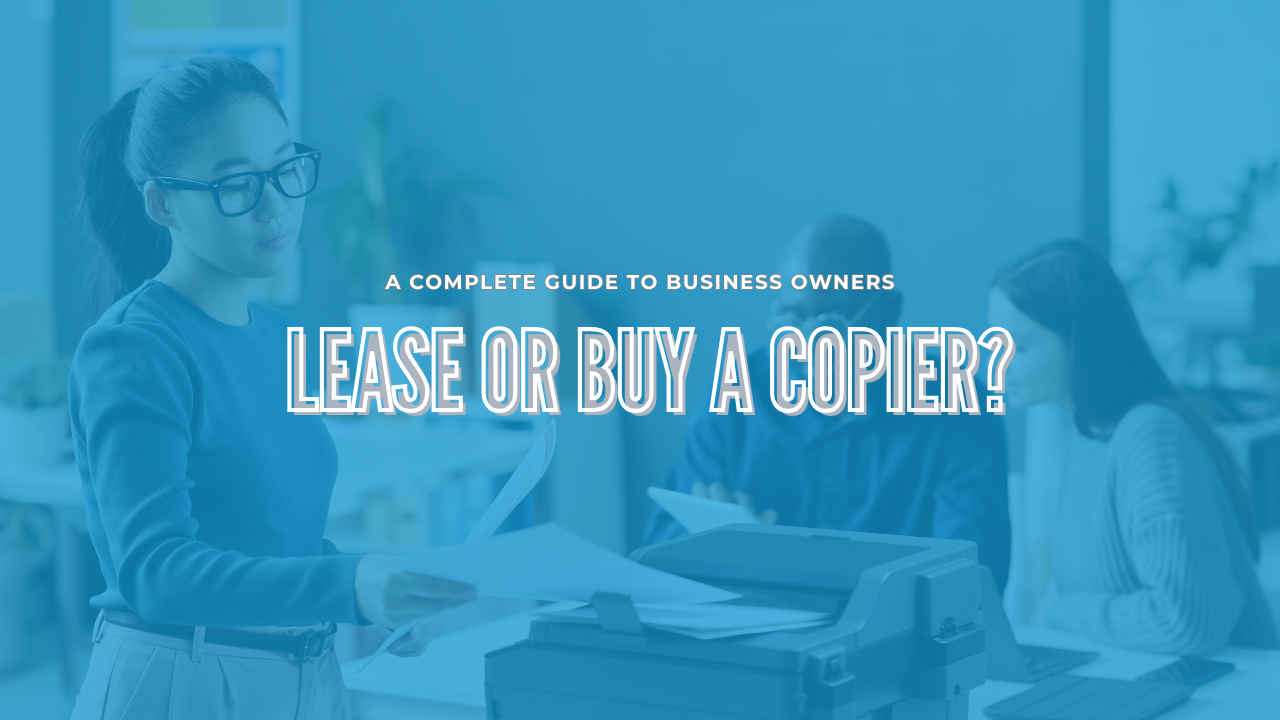
Copier Lease vs. Purchase Guide Overview
The table below provides a high-level comparison of copier leasing versus purchasing to help business owners evaluate cost, flexibility, and operational impact at a glance.
Want to dive deeper? Read on to explore each factor in detail, see real-world business scenarios, and learn how Managed Print Services (MPS) can help you make the most cost-effective, efficient, and future-ready choice for your office copier needs.

Upfront Costs: Leasing vs. Buying
Leasing a copier requires a low initial investment with predictable monthly payments, allowing businesses to preserve working capital for growth, staff, or other operational priorities.
It is especially beneficial for companies that want access to modern technology without a significant upfront outlay.
Buying a copier, in contrast, demands higher upfront capital or financing, which can strain budgets but offers the advantage of long-term ownership.
Over time, purchasing may prove more cost-effective if the copier is heavily used and maintained properly, offering potential savings compared to continuous leasing payments.
Cash Flow and Budget Management: Leasing vs. Buying

Leasing provides fixed monthly costs, making it easier for business owners to plan budgets, forecast expenses, and maintain cash flow stability. However, you may still face with higher interest rates.
This predictable structure is attractive for companies with fluctuating revenues or those seeking to allocate capital to other growth initiatives. Buying a copier requires a larger upfront outlay, which can temporarily tie up funds, though depreciation and potential tax benefits may offset part of the cost.
Careful financial planning is essential when purchasing, as the business bears both the initial investment and the ongoing operational costs.
Maintenance and Downtime: Leasing vs. Buying
When you lease a copier, maintenance and repairs are typically included, reducing operational disruptions and minimizing IT involvement. Businesses benefit from quick response times and professional service as part of the lease agreement.
When buying a copier, the organization is responsible for maintaining and repairing the equipment, which can require internal IT resources or external service contracts. Businesses must plan for potential downtime, unexpected repairs, and service costs, which can impact productivity if not managed effectively.
For companies interested in eco-friendly printing solutions, maintenance and reliability become even more critical for ensuring sustainability goals are met while keeping operations smooth.
Technology Upgrades and Obsolescence: Leasing vs. Buying
Leasing allows businesses to stay current with rapidly evolving copier technology. At the end of the lease term, companies can upgrade to newer models with advanced features, improved efficiency, and better security.
Purchasing a copier offers ownership, but upgrading requires new capital, which can leave businesses using outdated equipment that may slow operations.
For companies aiming to maintain competitive office equipment, balancing cost and technological relevance is crucial when deciding whether to lease or buy.
Flexibility and Scalability: Leasing vs. Buying
Leasing provides high flexibility, making it easier for businesses to scale operations, adjust to changing print requirements, or expand to new locations. It is particularly useful for companies experiencing growth or seasonal fluctuations in print volume.
Buying a copier offers fixed ownership, limiting adaptability when business needs change or print volumes increase unexpectedly.
Companies considering purchasing should carefully evaluate long-term growth plans and whether their current equipment will meet future demands.
Total Cost of Ownership: Leasing vs. Buying
Leasing a copier generally involves lower upfront costs, but monthly payments and potential lease fees can result in lower long-term savings. These costs often include maintenance, service, and, in some cases, upgrades.
Buying a copier requires a larger initial investment but can be more economical over time if the equipment is well-maintained and used extensively. Ownership also provides asset value and resale opportunities.
Businesses should consider all factors, including initial cost, operational expenses, upgrades, and resale value that may depreciates, when evaluating the total cost of ownership.
Best Fit for Business Owners
Leasing is best suited for businesses that value flexibility, predictable costs, minimal IT oversight, and access to the latest copier technology. It works well for growing organizations or companies with dynamic printing needs.
Purchasing is ideal for businesses with stable, long-term printing requirements that prioritize asset ownership, long-term cost savings, and control over maintenance and operations.
Careful consideration of business goals, print volumes, and financial strategy is essential to making the right decision.
How Managed Print Services (MPS) Plays a Part
Managed Print Services (MPS) helps businesses maximize the efficiency, reliability, and cost-effectiveness of their copier fleet, whether leased or owned.
Through usage monitoring, optimizing workflows, and managing maintenance proactively, MPS reduces downtime, controls operational costs, and ensures technology stays up-to-date with business needs.
Key Benefits of MPS:
- Cost Management: Tracks usage and consumables to prevent overspending and optimize the total cost of ownership. MPS works seamlessly with managed print services across California or NYC office printer leasing options to align your fleet with local business needs.
- Maintenance and Reliability: Proactively schedules service, reducing downtime and minimizing IT intervention.
- Lifecycle Management: Ensures timely upgrades and replacements to avoid technology obsolescence.
- Scalability and Flexibility: Adjusts services based on changing print volumes and business growth.
- Operational Efficiency: Streamlines workflows, allowing staff to focus on core business instead of copier issues.
Final Takeaways
When deciding between leasing and purchasing a copier, consider cash flow, usage, technology needs, and long-term cost impact. Managed Print Services (MPS) can enhance either option by reducing downtime, controlling costs, and simplifying device management. Align your choice with operational priorities to maximize efficiency, ROI, and business growth.




.webp)

.png)