
.webp)
Yes, you can get out of a copier lease, but most agreements require some type of financial settlement. For most business owners, the best options are negotiating a buyout, transferring the lease, upgrading equipment through the current provider, or waiting until the lease ends.
Before making a decision, review your copier lease agreement and request a written payoff amount from the leasing company. A few phone calls could save your business thousands of dollars.
Which Copier Lease Exit Option Is Best for Your Business?
We want you to have the best option when exiting a contract such as this. That is why we compiled the right solutions depends on your situation.
Many business owners assume they only have two choices: keep paying or stop paying. In reality, several alternatives may be available depending on the lease terms.
How to Get Out of a Copier Lease in 5 Steps
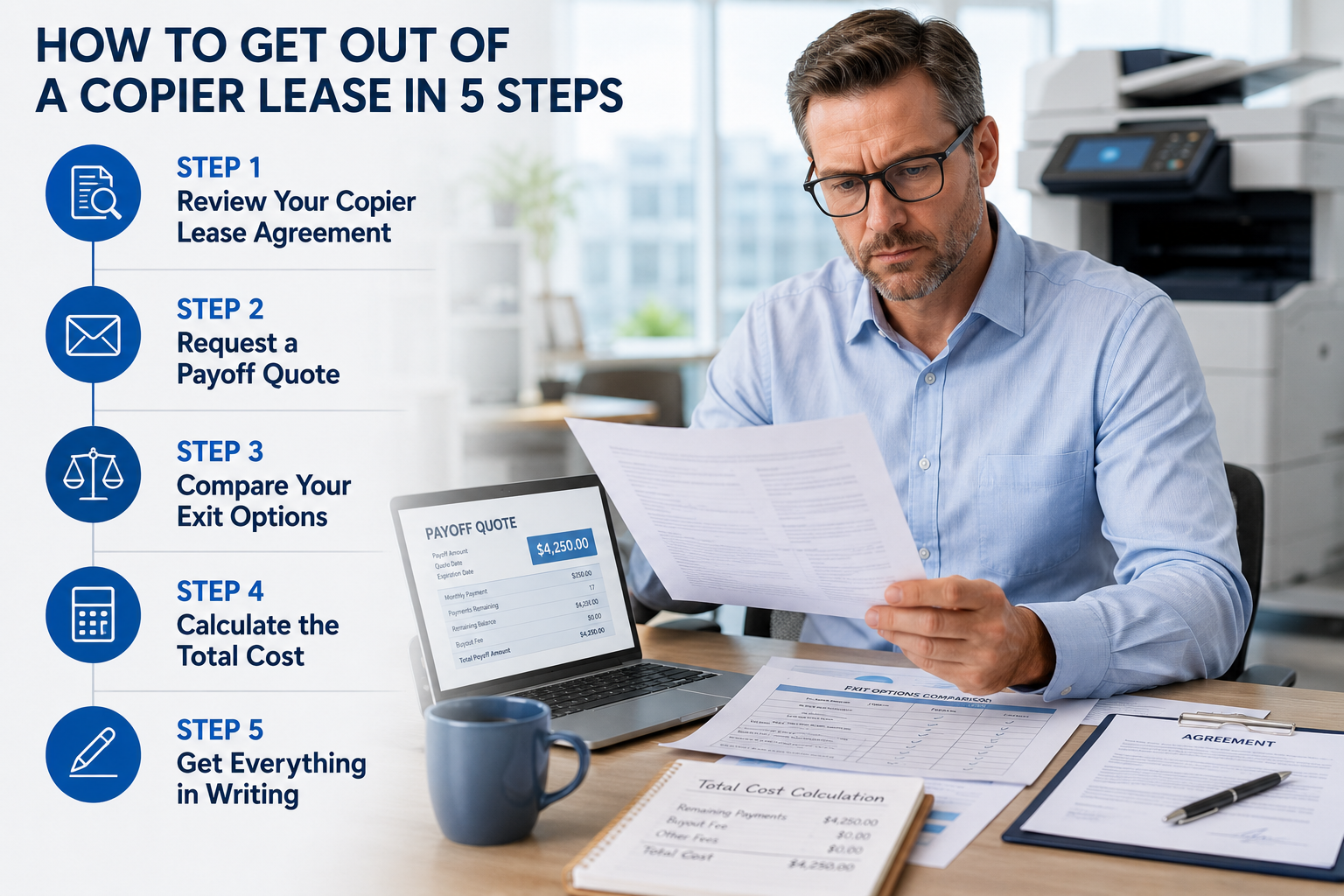
Step 1: Review Your Copier Lease Agreement
Start by locating your contract.
Pay close attention to:
- Remaining lease term
- Monthly payment amount
- Buyout clauses
- Early termination provisions
- Automatic renewal language
Many copier lease issues stem from business owners not knowing exactly what they signed.
Step 2: Request a Payoff Quote
Contact the leasing company and request:
- Buyout amount
- Early termination cost
- Remaining balance
- Settlement options
Always ask for the information in writing.
Step 3: Compare Your Exit Options
Evaluate:
- Buyout
- Settlement
- Lease transfer
- Equipment upgrade
- Waiting until expiration
The cheapest option is not always the best long-term decision for your business.
Step 4: Calculate the Total Cost
Compare:
- Remaining lease payments
- Buyout amount
- Upgrade costs
- Potential savings
For example, a business paying $250 per month with 24 months remaining still owes approximately $6,000 before additional fees.
Step 5: Get Everything in Writing
If you negotiate any changes, obtain written confirmation.
Never rely on verbal agreements when dealing with copier leases.
Can You Cancel a Copier Lease Early?
In most cases, no.
Most copier leases are structured as non-cancelable financing agreements. Returning the copier does not automatically end your payment obligations.
Many contracts require:
- Remaining lease payments
- Early termination fees
- Equipment return procedures
- Administrative charges
Business owners are often surprised to learn that the lease and the copier itself may be governed by separate agreements.
Why Are Copier Leases Difficult to Cancel?
Copier leases are designed to recover the cost of:
- Equipment
- Financing
- Service administration
- Provider profit
Most copier leases run for:
- 36 months
- 48 months
- 60 months
A business that signs a five-year lease may still owe thousands of dollars even if the copier is no longer needed.
How Much Does It Cost to Get Out of a Copier Lease?
The answer depends on your contract.
Some leasing companies require 100% of the remaining payments, while others may negotiate a reduced settlement.
Example Costs
These figures do not include potential administrative fees or buyout charges.
Always request an official payoff statement before making decisions.
Copier Lease Exit Options Compared
For many business owners, the best choice depends on how much time remains on the lease and whether the copier still supports business operations.
Option 1: Buy Out the Copier Lease
A buyout allows your business to terminate the lease by paying a negotiated amount.
A buyout may make sense when:
- Only a small balance remains
- The copier still has useful life
- You need an immediate exit
After the buyout, your business owns the equipment.
Option 2: Negotiate a Settlement
Some leasing companies may accept less than the full remaining balance.
Settlement discussions are often successful when:
- Your business is downsizing
- The company is closing
- Financial circumstances have changed
The sooner you contact the leasing company, the more flexibility you may have.
Option 3: Transfer the Copier Lease
Some contracts allow another business to assume the lease.
This option can help:
- Avoid large termination fees
- Reduce financial obligations
- Preserve business credit
The new company typically must meet the leasing company's credit requirements.
Option 4: Upgrade Through Your Current Copier Provider
Many copier providers prefer retaining customers rather than losing them.
An equipment upgrade may allow your business to:
- Replace outdated equipment
- Improve print efficiency
- Consolidate contracts
- Restructure payments
If you're replacing older equipment, modern copiers often include energy-saving features that support eco-friendly printing solutions while reducing operating costs.
This option often works well when the existing copier no longer supports business needs.
Considering Your Next Copier?
Whether you're replacing an aging machine or planning your next office upgrade, eCopier Solutions can help you find a copier solution that fits your business needs.
If your current copier lease isn't meeting your needs, eCopier Solutions can help you explore modern copier and printer solutions designed for today's business environment.
.jpg)





.png)


