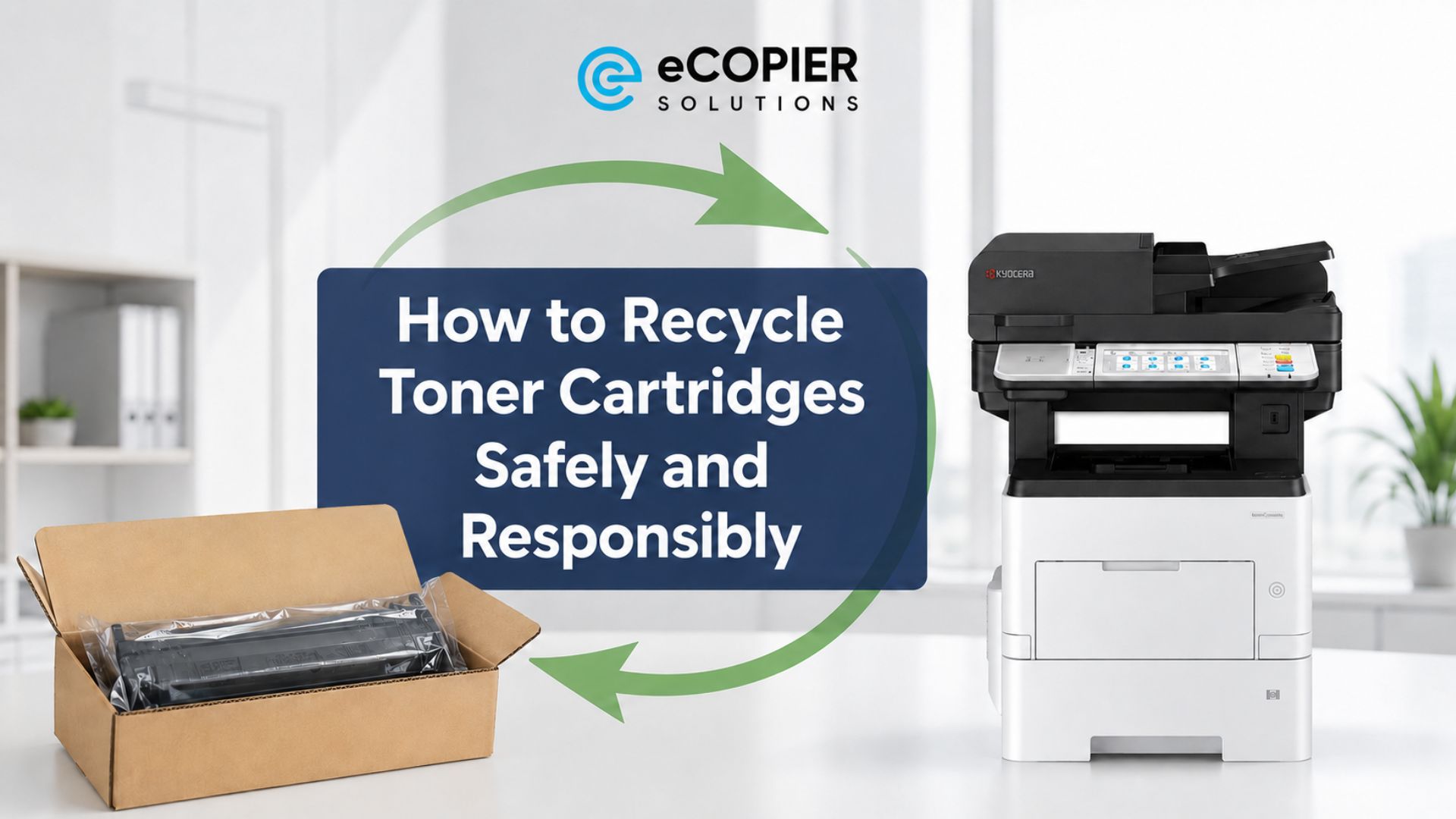
Empty toner cartridges should usually go back through a manufacturer, retailer, office-supply provider, or qualified recycling company.
If you’re learning how to recycle toner cartridge waste, start by keeping it out of household trash and ordinary curbside bins. So, we’ll walk through safe removal, packaging, return options, reuse, office collection, and waste-toner containers.
Why Toner Cartridges Need a Specialized Recycling Process
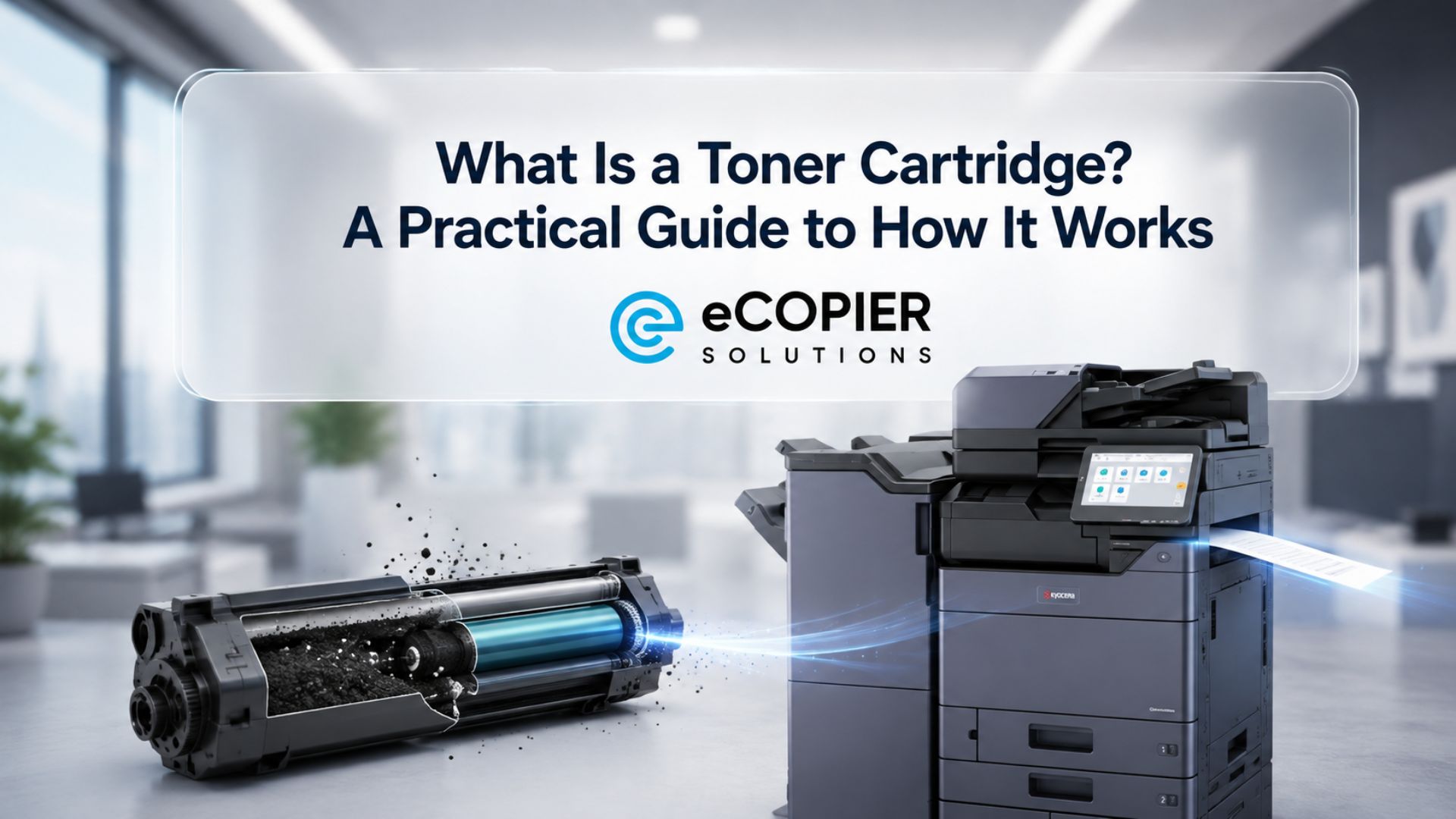
A toner cartridge contains several materials packed into one casing. These can include plastic, steel, aluminum, rubber, electronic components, magnets, and residual toner powder. Most municipal systems cannot safely separate that mix.
Specialized facilities have the right equipment for the job. One mechanical recycling study processed 500 kg of waste toner cartridges and recovered 95% of the residual toner, 97.5% of the aluminum, 98.4% of the steel and magnets, and 98.8% of the plastic. Those recovery rates show why an approved program is worth using.
You can also read about the wider benefits of recycling toner cartridges for your office, including resource recovery, cost savings, and workplace sustainability.
Here’s how they are recycled:
Can Toner Cartridges Go in the Recycling Bin or Trash?
Toner cartridges generally should not go into household trash or an ordinary curbside recycling bin. A local authority may accept them through a separate program, so check its rules before leaving one for collection.
Residual powder and mixed components can contaminate common recycling streams. We also recommend that you never pour loose toner into a drain, burn a cartridge, or open its casing at home. Check the cartridge model and contact the local program first since acceptance rules can vary.
How to Prepare and Recycle an Empty Toner Cartridge Step-by-Step
A careful return starts before the cartridge leaves your printer. A few minutes of preparation can prevent leaks, damaged components, and rejected packages.
Here are the steps to follow:
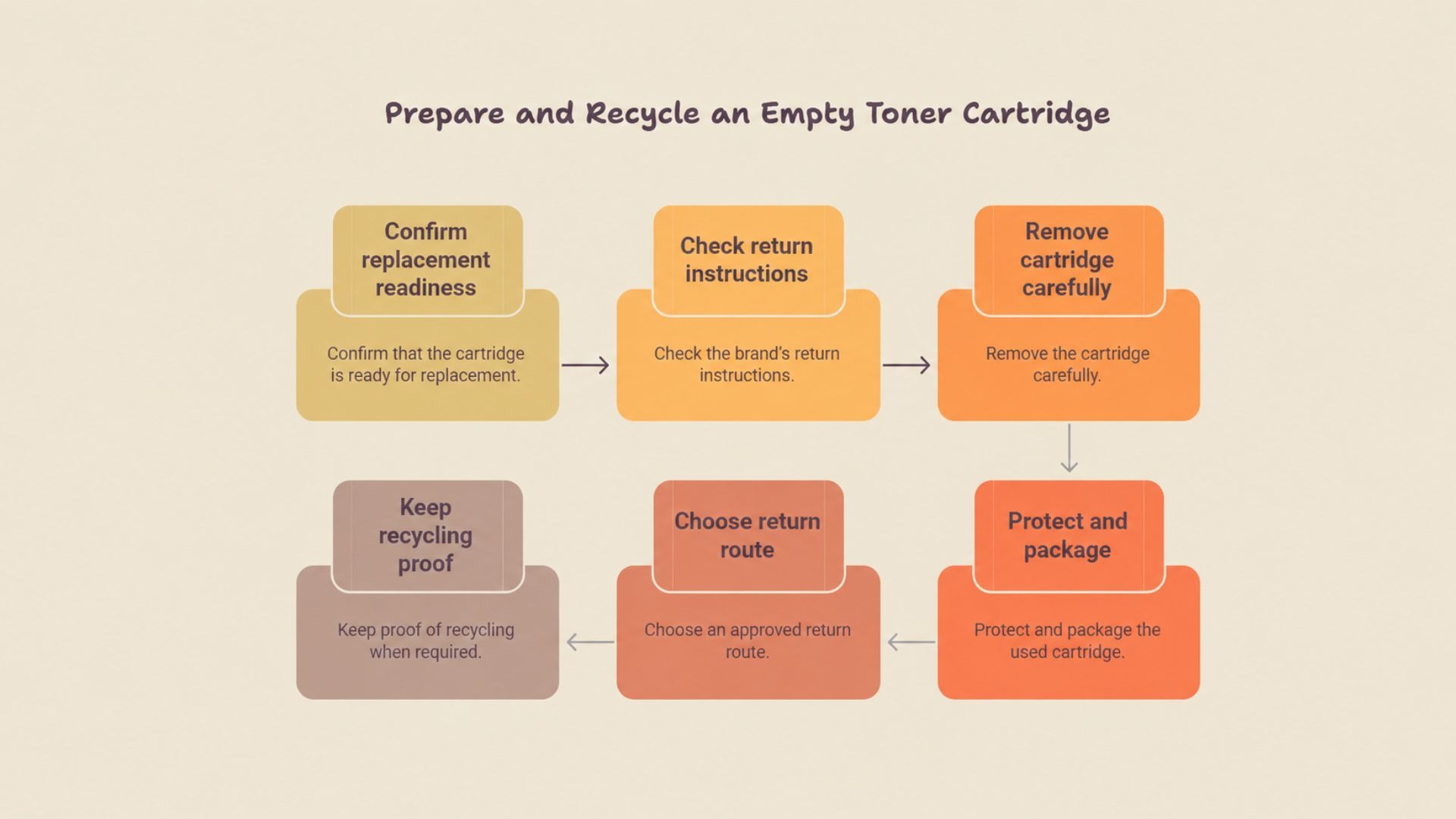
1. Confirm That the Cartridge Is Ready for Replacement
Check the printer’s control panel, supply-status page, toner warning, and recent print quality. A low-toner message does not always mean the cartridge is fully empty, so replacement may still be a little way off.
We recommend checking the printer manual before you remove anything. The manual can tell you what the warning means and how the cartridge should come out.
If the warning appears too early or print quality has changed, check our laser printer maintenance guide before replacing the cartridge.
2. Check the Brand’s Return Instructions
Find the manufacturer’s name and cartridge number on the label. Then confirm if the cartridge is original, compatible, refilled, or remanufactured.
That detail matters because return programs have different acceptance policies. Some manufacturers accept only their own original cartridges. Others place limits on models, quantities, packaging, or business collections.
3. Remove the Cartridge Carefully
Turn off the printer if the manual tells you to do so. Then allow the fuser and other hot internal parts to cool before opening the access panel.
Hold the cartridge by its handle and keep it level. Avoid touching the drum because oils from your fingers can affect print quality if the cartridge is reused. Do not shake a leaking cartridge or try to open its casing.
4. Protect and Package the Used Cartridge
The original protective bag and box are usually the easiest packaging options. If you no longer have them, place the cartridge inside a sealed bag. Then pack it in a sturdy box with enough padding to stop movement.
Use the cap or seal supplied by the manufacturer if one is available. Keep the cartridge upright and check that the package closes securely.
5. Choose an Approved Return Route
Look for a manufacturer take-back service, participating retailer, qualified cartridge recycler, office-supply provider, or approved local collection point.
Before shipping or driving anywhere, confirm the accepted models, quantities, packaging rules, and possible fees. This small check can save you a wasted trip and prevent the cartridge from being rejected.
6. Keep Proof of Recycling When Required
A household usually needs no formal record. A business may need shipping confirmation, collection receipts, recycling certificates, or an internal log.
These records can support sustainability reporting, office policies, vendor reviews, and regulated waste procedures. Keep the program name, date, cartridge quantity, and final destination together.
Where Can You Take Empty Toner Cartridges?
The best option depends on the cartridge brand, condition, quantity, and your location. Some programs recycle ink and toner cartridges together, while others accept only one type. So, check the program’s requirements before you pack or drop off anything.
Here are the main options:
Can Toner Cartridges Be Reused or Recycled for Money?
Some toner cartridges can be reused or exchanged for money, credit, or rewards. Refilling replaces the toner powder, while remanufacturing includes cleaning, inspection, testing, and replacement of worn components. Material recycling breaks the cartridge down so its usable materials can be recovered.
Programs that recycle toner cartridges for money usually pay based on the brand, model, quantity, physical condition, and current resale demand. Other programs offer store credit, charitable donations, rewards, or free disposal. Check the value before shipping because many empty cartridges have no resale market.
How Businesses Can Set up a Toner Recycling Program
A shared collection system makes the recycling of toners much easier across an office. It also stops employees from placing cartridges in general waste by mistake.
A 2021 peer-reviewed study estimated that only 20%-30% of toner waste is recycled globally, while around 70%-80% reaches landfills. A clear office process can help close that gap.
Here are the basic actions:
- Place a labeled collection box near the printer area.
- Keep cartridges in protective bags or original packaging.
- Assign one person to manage returns and records.
- Separate cartridges by brand if the program requires it.
- Train employees to report leaks and leave cartridges intact.
- Arrange collection before the box becomes overcrowded.
- Track quantities, dates, destinations, and recycling confirmations.
Cartridge collection works best as part of a wider office plan. Our guide to sustainable printing practices also covers print settings, paper use, equipment care, and daily habits that can reduce waste.
How eCopier Solutions Supports Responsible Toner Management
At eCopier Solutions, we help businesses manage the wider toner lifecycle without adding another long list of supply tasks. Our copier and printer leasing services can include free unlimited toner, maintenance, shipping, remote diagnostics, and managed print support.
Automatic supply replenishment can prevent excess stock and emergency orders. We also help clients select equipment that suits their print volume. Regular maintenance can reduce failed pages, leaks, damaged components, and early cartridge replacements.
Our website lists eco-friendly recycling programs among the services available to small businesses. Program details can depend on the cartridge, lease, and location. Contact our team so we can confirm the recycling option available for your business.
What Do I Do With an Old Toner Cartridge?
Keep an old toner cartridge sealed and return it through a manufacturer, retailer, print provider, remanufacturer, or qualified recycling facility. Check the program’s accepted brands and packaging rules before you travel or ship it, since some locations accept only certain cartridge models.
Can You Reuse a Waste Toner Cartridge?
An ordinary toner cartridge may be refillable or remanufacturable if its casing and internal parts remain usable. A waste-toner container has a different job because it collects excess powder. It may need replacement or professional servicing, based on the printer manufacturer’s instructions.
What Is the Lifespan of a Laser Printer Toner Cartridge?
An unopened laser toner cartridge usually lasts two to three years when stored correctly. Once installed, it may print around 1,000 to more than 10,000 pages, depending on the cartridge size, printer model, and page coverage. Light use can spread that yield across several years because toner is a dry powder.
How Do You Remove Waste Toner?
Remove waste toner only through the process provided in the printer manual. Some machines use a replaceable waste-toner container, while others require professional service. Avoid vacuuming, blowing, sweeping, or directly handling loose powder without the equipment and protective steps specified by the manufacturer.
Does a Toner Cartridge Need to Be Completely Empty Before Recycling?
Most approved programs accept spent cartridges that still contain a small amount of residual toner. Leave the cartridge intact and package it securely. Washing, opening, or scraping the casing can release powder and may make the cartridge unsuitable for reuse or recycling.





.webp)



.png)